
Czech law (zákon č. 361/2000 Sb., § 98) requires all motorcycle riders and passengers to wear a fastened protective helmet meeting ECE standards. Beyond that single legal requirement, the choice of what to wear is left to the rider. The Czech Police (Policie ČR) annual traffic accident report for 2023 recorded 2,847 motorcycle-involved accidents, with abrasion injuries to limbs and blunt force trauma to the torso as the most frequent non-fatal outcomes. These figures inform what experienced Czech riders select from, regardless of what the law mandates.
Helmets: The ECE 22.06 Standard
The European helmet standard ECE 22.06 replaced ECE 22.05 for new models as of January 2024. Czech dealers are legally permitted to sell existing 22.05 stock, but new certifications issued since that date require the updated standard. The practical difference for riders involves improved rotational impact absorption — a response to research on oblique impact injuries — and more stringent chin bar testing for full-face models.
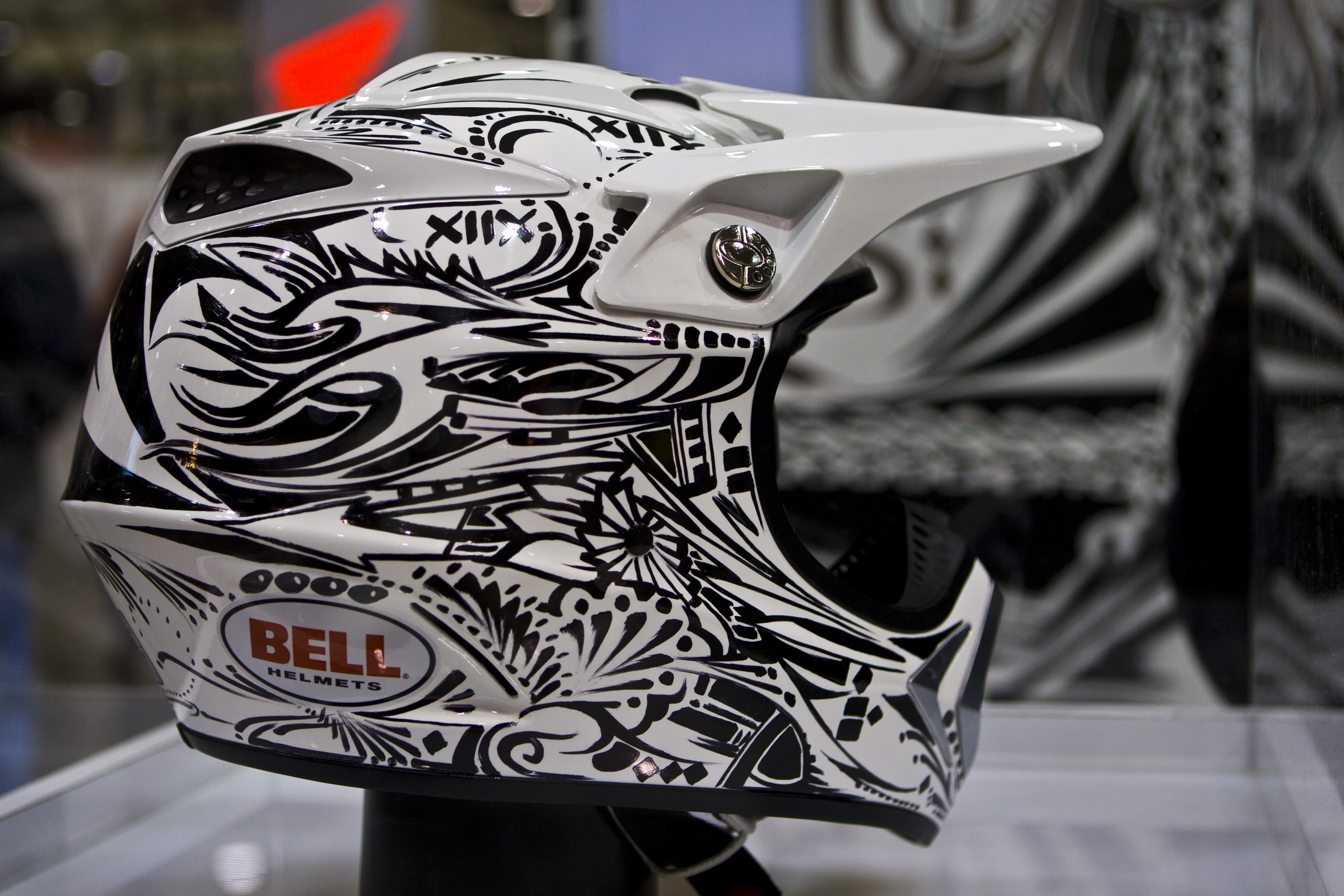
A full-face motorcycle helmet of the type commonly used on Czech roads. The ECE certification sticker is legally required and checked during STK inspections. Source: Wikimedia Commons / CC BY-SA
Czech riders most frequently purchase helmets in the 4,000–9,000 CZK range, as documented by the Heureka.cz price index, which aggregates retail listing data from domestic Czech vendors. The Shoei NXR2, AGV K6S and Bell Race Star Flex are documented as top sellers in the premium segment. In the mid-range, the Shark Skwal i3 and Scorpion EXO-R1 Evo appear most consistently in Czech retailer stock reports.
The ECE 22.06 label on a helmet sold in Czech Republic must include the approval number in the format: ECE 22.06 followed by a country code and approval number. Helmets without this marking are not legal for road use in the Czech Republic.
Jackets: CE Level and Czech Temperature Range
The Czech riding season runs roughly from mid-March to late October, with an effective core season of May through September. Temperatures during this window vary from 8°C at altitude on the Šumava plateau to 34°C during Prague summer peaks. This range makes jacket selection a more complicated decision than in markets with stable climates.

A full leather motorcycle jacket with CE Level 2 armor pockets. Leather remains the most abrasion-resistant natural material for motorcycle apparel. Source: Wikimedia Commons / CC BY-SA
CE EN 13595-1 is the standard governing motorcycle protective apparel in the EU. Level 1 and Level 2 refer to the energy absorption capacity of the armor inserts at shoulder, elbow and back. Czech rider communities (notably the moto.cz forum) show consistent preference for CE Level 2 back protectors, even when purchasing Level 1 jackets, reflecting awareness of spinal injury risk in Czech accident data.
| Item | Legal Requirement (CZ) | Recommended Standard | Approx. Cost (CZK) |
|---|---|---|---|
| Helmet | ECE 22.05/22.06 mandatory | ECE 22.06, full-face | 4,000 – 18,000 |
| Jacket | None | CE EN 13595, Level 2 | 5,500 – 22,000 |
| Gloves | None | CE EN 13594, Level 1+ | 1,200 – 5,000 |
| Boots | None | CE EN 13634, Level 2 | 3,500 – 12,000 |
| Trousers | None | CE EN 13595, hip/knee armor | 4,000 – 14,000 |
Gloves: Year-Round Considerations
Czech riders who commute through April and October — the shoulder months — typically maintain two sets of gloves: a winter-rated pair certified to CE EN 13594 with thermal lining, and a summer pair prioritizing ventilation and grip feedback. Waterproofing (Gore-Tex or equivalent membranes) is valued for the shoulder months given Czech precipitation averages of 450–650 mm annually distributed across spring and autumn.
Footwear and the STK Inspection
Motorcycle boots are not subject to Czech roadside inspection, but they appear in the Czech Police accident report as a documented variable in ankle and lower leg injury outcomes. CE EN 13634 covers motorcycle footwear; Level 2 in all four zones (abrasion, impact, rigidity, transverse rigidity) represents the most protective category commercially available.
Czech retailer data from Motonad.cz and Bikershop.cz (both Czech-owned retailers operating since 2005 and 2009 respectively) indicates that ankle-height motorcycle boots priced between 3,500–6,500 CZK account for the largest volume of footwear sales — a category that balances walkability in urban settings with adequate protection.
Visibility: Retroreflective Materials
Czech law does not mandate high-visibility apparel for motorcyclists, but the Czech Transport Research Centre (CDV) has published research showing that retroreflective elements on jackets and helmets measurably reduce reaction time in motorist conflict scenarios at urban intersections. Several Czech municipalities have informal campaigns encouraging high-visibility use. Alpinestars, Rev'It and Dainese all produce Czech-stocked jackets with integrated retroreflective panels that meet EN 471 Class 1 without sacrificing aesthetics.
Source reference: Czech Transport Research Centre (CDV), Road Safety Publications.